Are you trying to figure out how much hardscaping costs per square foot?
2026 is the year of smarter tools for consumer pricing, and that includes your hardscaping material pricing! AI assistants, instant estimates, and data-driven decisions are everywhere. Hardscaping is catching up (see our hardscape cost calculator)!
Instead of guessing costs, Savannah homeowners can now understand pricing per square foot and use Coastal Hardscapes’ cost calculator to see how materials and layout choices affect the final number.
Today, we will walk you through a guide to help you understand the cost of hardscaping based on square footage!
What to know about hardscaping costs:
Before we dive into pricing for hardscaping costs per square foot, it is important to keep in mind a few things:
- You will usually get a price that factors in the material, the equipment, the prep, and the installation (aka labor) for one total price per foot
- Pricing for materials only is lower, because it does not factor in delivery and installation (in case you compare to a supply yard pricing)
- Design complexity of hard-scaping and soil conditions/site prep can raise the price based on the complexity of the labor
To put it another way, it is not always as simple as a flat cost per square foot, but we will do our best to give you a rough estimate based on project size in the forthcoming article.
What Are the Average Costs of Popular Hardscaping Materials Per Square Foot?
Hardscaping costs in Savannah are best understood on a per-square-foot basis, because material choice and layout drive pricing more than almost anything else. Coastal conditions also matter. Moisture, sandy soil, and drainage needs can influence both material selection and installation approach.
Below is a realistic snapshot of common hardscaping material costs in the Savannah area. These are planning ranges, not final bids. Exact numbers depend on layout, base prep, and site conditions, which is why Coastal Hardscapes provides an online cost calculator to help homeowners narrow expectations early.
| Material Type | Typical Cost Per Sq Ft (Installed) | Cost Profile |
|---|---|---|
| Concrete pavers | $14–$22 | Mid-range, versatile |
| Brick pavers | $16–$26 | Classic look, moderate cost |
| Poured concrete | $10–$18 | Budget-friendly, simple layouts |
| Natural stone | $22–$40+ | Premium material |
| Gravel or crushed stone | $6–$12 | Lowest cost, limited use |
These ranges help homeowners compare options before design decisions lock in cost. For a clearer estimate tied to your yard size and material mix, Coastal Hardscapes’ calculator bridges the gap between inspiration and budgeting.
How Much Do Pavers Cost Per Square Foot?
Pricing varies by style, thickness, and pattern, but most homeowners land within a predictable range.
Concrete pavers generally cost $14 to $22 per square foot installed. Brick pavers trend slightly higher, often $16 to $26 per square foot, due to material cost and labor. Intricate patterns, borders, and curves increase labor time, which affects pricing more than the pavers themselves.
Pavers also offer flexibility. If settling occurs, individual units can be reset without replacing the entire surface. That repairability often offsets the higher upfront cost compared to poured concrete.
What Is the Price Range for Concrete Hardscaping Materials?
Concrete remains one of the most cost-effective hardscaping materials per square foot, especially for larger areas. In Savannah, basic poured concrete typically lands at the lower end of the pricing range, while decorative finishes push costs higher.
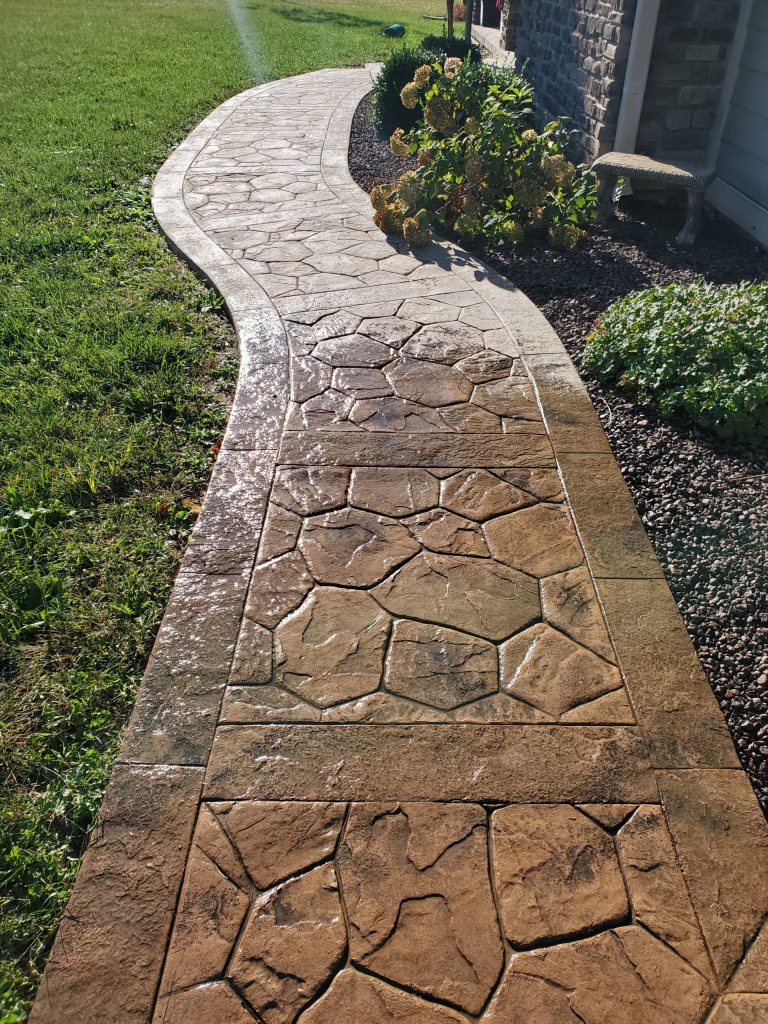
Stamped or textured concrete increases the per-square-foot price because it requires more labor, precise timing, and finishing skill. That added cost buys visual appeal, but it also comes with tradeoffs. Repairs are harder to blend, and cracks are more visible if the base isn’t prepared correctly.
Concrete pricing is most affected by:
- Finish type and color treatments
- Thickness and reinforcement needs
- Drainage and grading requirements
- Access and pour conditions
For homeowners prioritizing budget control, concrete can be a practical solution. For those balancing cost with flexibility and long-term performance, pavers often justify the higher per-square-foot price.
Understanding these ranges early helps Savannah homeowners choose materials that fit both their vision and their budget before moving into full design and installation.
How Do Retaining Wall Materials Affect Cost Per Square Foot?
Retaining wall costs depend on what the wall is expected to do, not just how it looks. In Savannah, walls often manage elevation changes, soil movement, and heavy rain runoff, which means material strength and drainage performance matter as much as appearance..
Materials with higher structural capacity and moisture resistance typically cost more per square foot, but they also reduce long-term issues like bowing, cracking, or washout. Lighter materials may look appealing on day one, yet require more reinforcement or maintenance over time. That tradeoff is where pricing really takes shape.
In short, the more work a retaining wall must do, the more the material choice influences cost.
What Are the Average Costs of Different Retaining Wall Materials?
Retaining wall materials generally fall into clear pricing tiers, each suited to different yard conditions and design goals.
| Retaining Wall Material | Typical Cost Tier | Best Use Case | Cost Drivers |
|---|---|---|---|
| Concrete block (segmental) | Mid | Most residential walls | Strength, modular install |
| Poured concrete | High | Tall or structural walls | Forming, labor intensity |
| Natural stone | High | Premium visual impact | Material sourcing, labor |
| Brick | Mid to High | Decorative, shorter walls | Masonry detail |
| Timber | Low to Mid | Short-term or low walls | Moisture exposure limits |
How Does Installation Impact Retaining Wall Pricing?
How much do retaining walls cost? Installation is often the largest variable in retaining wall cost. Luckily, if it is added to a new patio, it can be a bit cheaper! Two walls made of the same material can differ significantly in price depending on how they’re built and where they’re placed.
Key installation factors include:
- Wall height and length
- Excavation depth and soil conditions
- Drainage systems behind the wall
- Reinforcement requirements
- Access for equipment and material staging
Drainage adds real cost but also real value. Proper backfill, gravel layers, and water management prevent pressure buildup that causes walls to fail. Skipping those steps lowers upfront pricing but raises long-term risk.
Well-installed retaining walls cost more per square foot for a reason. They’re engineered to stay straight, stable, and functional long after the project is finished.
How Can You Compare Hardscaping Material Prices Effectively?
The cleanest way to compare hardscaping prices is to standardize everything to cost per square foot, then layer in what each material demands beyond the surface. In Savannah, Coastal Hardscape’s pricing data shows that most residential projects fall into three clear pricing bands once materials and typical installation needs are considered.
Start by comparing:
- Base material cost per square foot
- Typical prep and base requirements
- Drainage needs for coastal soil
- Repair and replacement flexibility over time
When homeowners skip this step, they often compare a low material price against a higher one without accounting for labor intensity or long-term performance. That’s how “cheaper” options end up costing more later.
What Are the Cost Differences Between Pavers, Concrete, and Natural Stone?
| Material Type | Approx. Cost per Sq Ft | What Drives the Price |
|---|---|---|
| Concrete Pavers | $14–$22 | Thickness, pattern, base prep |
| Poured Concrete | $10–$16 | Finish type, reinforcement |
| Natural Stone | $22–$40+ | Stone type, cutting, labor |
Concrete typically sits at the lowest price point, especially for larger areas. Pavers cost more upfront due to base preparation and placement, but offer flexibility and easier repairs. Natural stone commands the highest prices due to material sourcing and labor demands, especially for precise fitting and leveling.
What Are the Pros and Cons of Each Hardscaping Material by Price?
Looking at the price alone of hard-scaping materials like pavers and natural stone hides important tradeoffs. For example, some materials are more durable and functional than others, even though they might cost more upfront.
Here’s how each hardscape material option stacks up when cost is weighed against performance.
Concrete (Lower Cost Tier)
Pros:
- Lowest upfront cost per square foot
- Clean, simple appearance
- Works well for large, open areas
Cons:
- Cracking is difficult to hide
- Repairs are often obvious
- Less forgiving in shifting soil
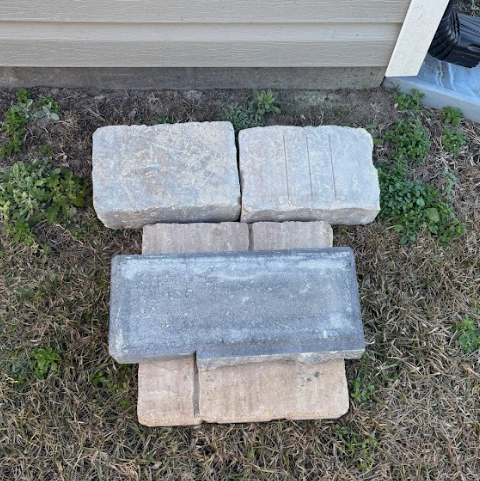
Concrete Pavers (Mid Cost Tier)
Pros:
- Balanced cost and durability
- Individual units are easy to repair
- Better drainage performance
- Wide range of styles
Cons:
- Higher upfront cost than poured concrete
- Requires proper base prep
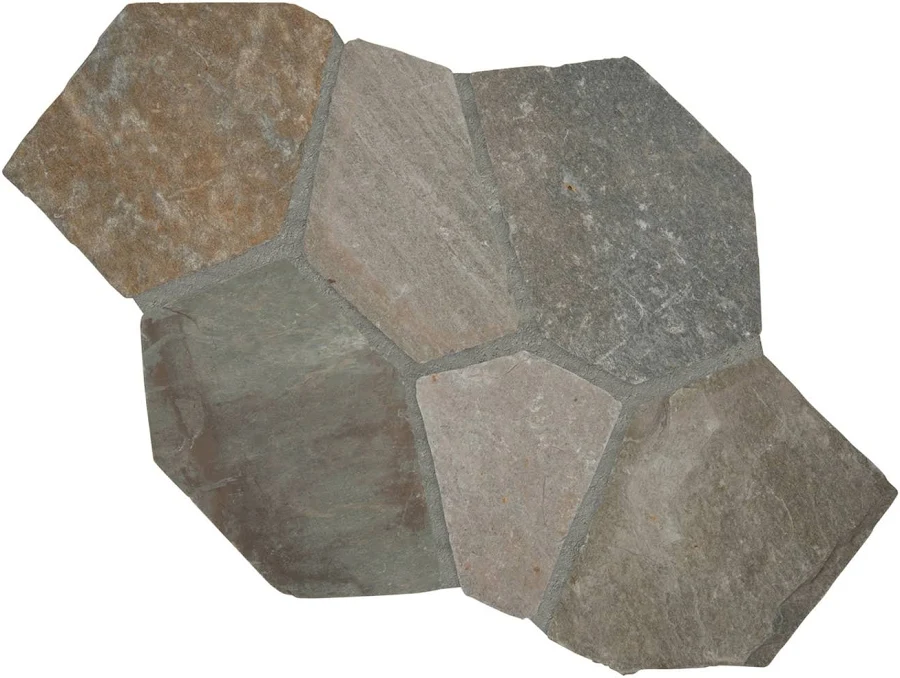
Natural Stone (High Cost Tier)
Pros:
- Premium look and long lifespan
- Strong resale and visual impact
- Performs well when properly installed
Cons:
- Highest cost per square foot
- Longer install time
- Repairs require skilled labor
For many Savannah homeowners, pavers land in the sweet spot. They cost more than concrete but avoid many of its long-term issues. Natural stone makes sense when the goal is a focal feature rather than full coverage.
What Factors Influence the Cost of Hardscaping Materials Per Square Foot?
Hardscaping prices don’t rise randomly. The cost per square foot is shaped by a short list of predictable factors that stack together. Materials are only one of the things homeowners see.
The biggest drivers of hardscape material costs are:
- Material categories: Concrete, pavers, and natural stone fall into different price tiers.
- Thickness and grade: Heavier, higher-quality materials cost more per square foot but last longer.
- Drainage requirements: Coastal soil often requires deeper base preparation, which increases overall costs.
- Project scale: Larger projects sometimes reduce per-square-foot labor costs, but increase total spend.
Using local pricing benchmarks, base material costs can range from $8–$25 per sq ft, but installed costs climb once labor, base, and layout are factored in. That’s why square-foot pricing should always be viewed as a range, not a fixed number.
How Do Labor and Site Preparation Affect Material Costs?
A hidden cost most DIYers underestimate when building a patio on their own is the cost of site preparation. In fact, a professional hardscaping company will tell you that the base and site prep work can sometimes cost just as much as the materials and installation. That is why it is important ot know this about site prep!
Site preparation costs increase when:
- Soil is sandy or unstable
- Drainage corrections are required
- Existing materials must be removed
- Access is limited for equipment
For example, a material priced at $12 per sq ft can realistically cost $18–$25 per sq ft installed, once excavation, base layers, compaction, and labor are included. Pavers and retaining features typically require more prep than poured concrete, which explains the price gap even when materials seem similar.
In coastal areas, skipping proper prep lowers upfront cost but almost always leads to settling or failure later.
What Role Do Design Complexity and Material Quality Play in Pricing?
Design complexity quietly pushes prices up for patios, fire pits, and retaining walls. Straight lines and open layouts cost less to install than curves, borders, steps, or multi-level designs. When you start adding multiple styles of materials, garden walls, and fire pits – you can see the price per square foot jump up!
Hardscaping pricing increases when designs include:
- Intricate patterns or custom cuts
- Multiple materials in one space
- Curves, steps, or elevation changes
- Integrated seating or retaining features
Material quality compounds this effect. Premium pavers or natural stone may cost $5–$15 more per sq ft than entry-level options, but they also offer better color retention, strength, and longevity.
In Savannah, the smartest projects match material quality to design complexity. Simple designs benefit from mid-range materials. High-detail layouts justify the use of higher-grade materials to prevent uneven wear and costly repairs.
The Final Word on Hardscape Pricing
Now you are equipped and understand how your hardscape material choices, layout, and size most affect the cost. Using our cost calculator early gives you clarity before design decisions lock in and helps you plan with your budget!
Reach out to Coastal Hardscapes below to get a free consultation, it’s the easiest way to plan confidently rather than adjust expectations later.
Frequently Asked Questions
1. How Much Does Professional Installation Add to Hardscaping Material Costs?
Professional installation typically adds 40%–70% to the base material price, depending on the scope and site conditions. In Savannah, that range exists for a reason. Coastal soil, drainage needs, and heat all demand careful base prep and sequencing.
What that looks like in real numbers:
- A material priced at $10–$15 per sq ft often lands at $18–$30 per sq ft installed
- Mid-range pavers priced around $15–$20 per sq ft commonly finish at $25–$35 per sq ft installed
- Premium stone can exceed $40+ per sq ft installed once labor and prep are included
That added cost covers excavation, base layers, compaction, drainage solutions, cutting, alignment, and cleanup. It’s not markup. It’s the work that keeps the surface from shifting, pooling water, or failing early.
2. What Is the Cost Difference Between DIY and Professional Hardscaping?
DIY projects often look cheaper on paper, but the gap narrows quickly once all costs are counted. Believe it or not, DIY costs for hardscaping are actually more than just the materials, not to mention the time component (and less than stellar final result in most cases!)
Typical DIY costs for hardscaping:
- Tool rentals and material waste add up fast
- Base depth and compaction are often underestimated
- Mistakes require tear-out and rework
- Time investment stretches over weeks instead of days
A DIY patio might start at $8–$12 per sq ft, but correcting settling, drainage issues, or uneven surfaces can erase those savings. Professional installs cost more upfront, yet they reduce the risk of paying twice for the same space. For homeowners who value predictability and long-term performance, professional installation usually delivers better value per dollar spent.
3. How Do Warranties and Maintenance Services Affect Overall Pricing?
Warranties and maintenance don’t always show up as line items, but they affect the total cost of a new hardscaping project over time. Professionally installed hardscaping often includes workmanship coverage and material warranties that protect against early failure.
4. How Can You Use Cost Estimators and Calculators for Accurate Pricing?
To get the most accurate results with a hardscaping price calculator, homeowners should use the online calculator fully rather than guessing. Enter real dimensions, select materials honestly, and explore different layout options. This shows how small changes affect the total cost before construction begins. The calculator doesn’t replace a professional consultation, but it puts you in a stronger position by setting clear expectations and preventing budget surprises later.

 The 5 Best Patio Companies in Savannah & Pooler