
How do you prevent weeds from growing between your pavers on your patio or walkway?
Here at Coastal Hardscapes, one of the biggest questions we get when we install a new patio is about maintenance. Some owners even consider installing a concrete patio just to avoid dealing with growth between the joints.
Now, a good patio installation company can mitigate most issues with the right base and paver spacing, but there is no 100% way to prevent weeds from growing between pavers from time to time.
Today, we will walk you through solutions to prevent weeds from growing between paver joints and strategies to deal with them if they do.
Why Do Weeds Grow Between Patio Pavers?
Ever notice grass clippings and debris flying everywhere after you mow your lawn? Now imagine all those tiny weed seeds blowing around your backyard, with a few landing between your patio pavers.
Here in Savannah, GA, our warm temperatures, frequent rainfall, and humid climate create ideal conditions for those seeds to grow. Add a little dirt, moisture, and deteriorating joint sand, and the spaces between your pavers can become the perfect environment for weeds.
Windblown Seeds and Organic Debris
Most weeds growing between patio pavers don’t actually come from underneath the patio. Instead, wind, rainwater, lawn equipment, and even birds carry seeds onto your patio or walkway. Over time, leaves, pollen, grass clippings, and dirt accumulate in the joints, creating a place for seeds to germinate and develop roots. Even with great installation, organic matter often becomes the ideal space for seeds.
➡️Quick Solution: Blow your patio area really well when cutting grass!
Missing or Deteriorating Joint Sand
The sand between your patio pavers helps keep the joints filled and the pavers stable. Over time, heavy rain, improper pressure washing, and normal wear can wash away or deteriorate joint sand.
When gaps begin forming, dirt and organic debris collect in those spaces, giving weeds more room to establish themselves. Remember, small mainteance goes a long way, so keeping an eye on this is your best bet.
➡️Quick Solution: Each year, consider adding some joint sand to your patio or calling us to help you.
Savannah’s Warm, Humid Climate
Living in coastal Georgia means dealing with hot summers, high humidity, and plenty of rainfall. While these conditions help keep your lawn green, they also encourage weeds to grow between your pavers.
Shaded patios, areas with poor drainage, and joints that stay damp after rainfall can be especially vulnerable.
➡️ The good news? Weeds between pavers don’t necessarily mean your patio was installed incorrectly. With proper cleaning, joint sand maintenance, and a few preventative steps, you can significantly reduce weed growth and keep your patio looking beautiful.
7 Ways to Prevent Weeds From Growing Between Patio Pavers
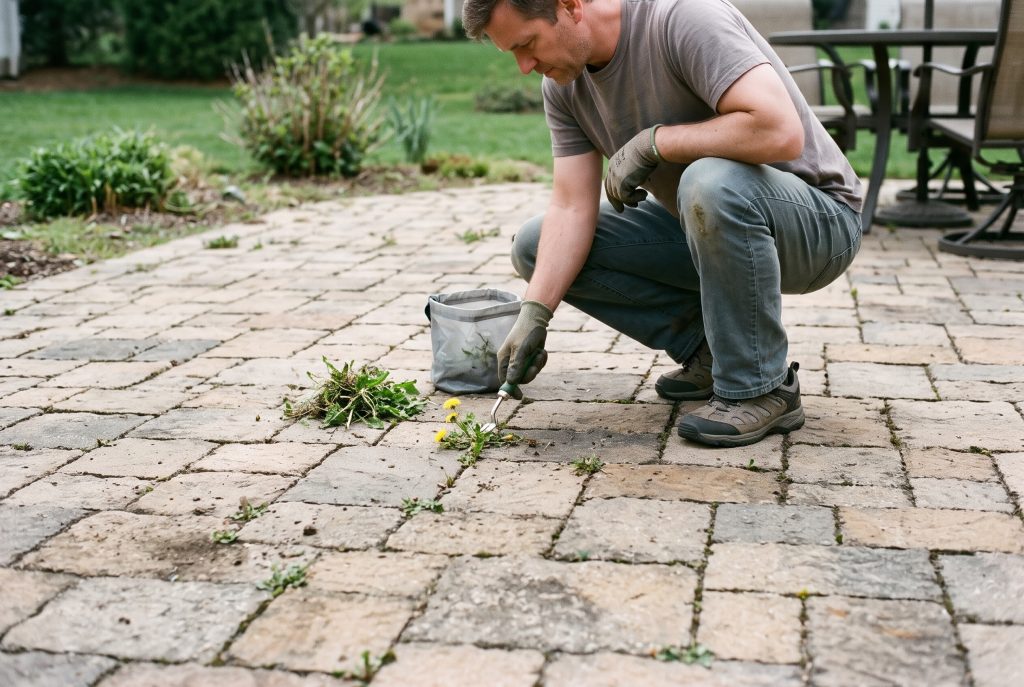
Let’s assume you have a paver patio or walkway and it already has a few weeds growing. In this guide, we will walk you through what to do about the existing weeds, then give you steps to prevent future weeds.
If the task will take more than two hours or you will need to run to the hardware store multiple times, consider having a professional hardscaping company like Coastal Hardscapes help you!
1. Remove Existing Weeds Before They Spread
Pull weeds by hand or use a paver joint weeding tool to remove as much of the root system as possible. Try to remove them before they flower and produce seeds, which can spread into other joints throughout your patio.
2. Use Polymeric Sand Between Your Pavers
Unlike regular joint sand, polymeric sand contains binding agents that harden when properly activated with water, helping keep the joints filled and reducing opportunities for weeds to grow. When installed correctly, it also helps prevent joint sand from washing away during Savannah’s frequent rainstorms.
3. Keep Your Patio Free of Leaves, Dirt, and Debris
Regularly sweep or use a leaf blower to remove grass clippings, fallen leaves, pollen, and other organic debris before they settle between your pavers. Pay extra attention to patios near landscaping beds, trees, and lawn areas where seeds and dirt tend to accumulate.
4. Address Drainage Problems and Standing Water
After heavy rainfall, which is common in Savannah, check your patio to identify areas where water pools or takes an unusually long time to drain. Poor drainage can keep paver joints damp, encourage weed growth, and contribute to joint sand erosion over time.
5. Consider Sealing Your Paver Patio
Certain paver sealers and joint-stabilizing products can help protect joint sand from erosion while reducing the buildup of dirt and moisture. Choose a product compatible with your specific pavers and joint material, since sealing alone will not completely prevent weeds.
6. Avoid Aggressive Pressure Washing
Using excessive pressure or spraying directly into the joints can dislodge sand and create openings where weed seeds can settle. If you pressure wash your patio, use an appropriate pressure setting and technique, and inspect the joints afterward for missing sand.
7. Inspect and Refill Paver Joints as Needed
Inspect your patio joints at least once or twice a year, especially after heavy rain or pressure washing, for missing or deteriorating sand. Refill joints with the appropriate material, following the manufacturer’s instructions, to maintain joint stability and reduce spaces where weeds can establish themselves.
Is Polymeric Sand Better Than Regular Sand for Preventing Weeds?
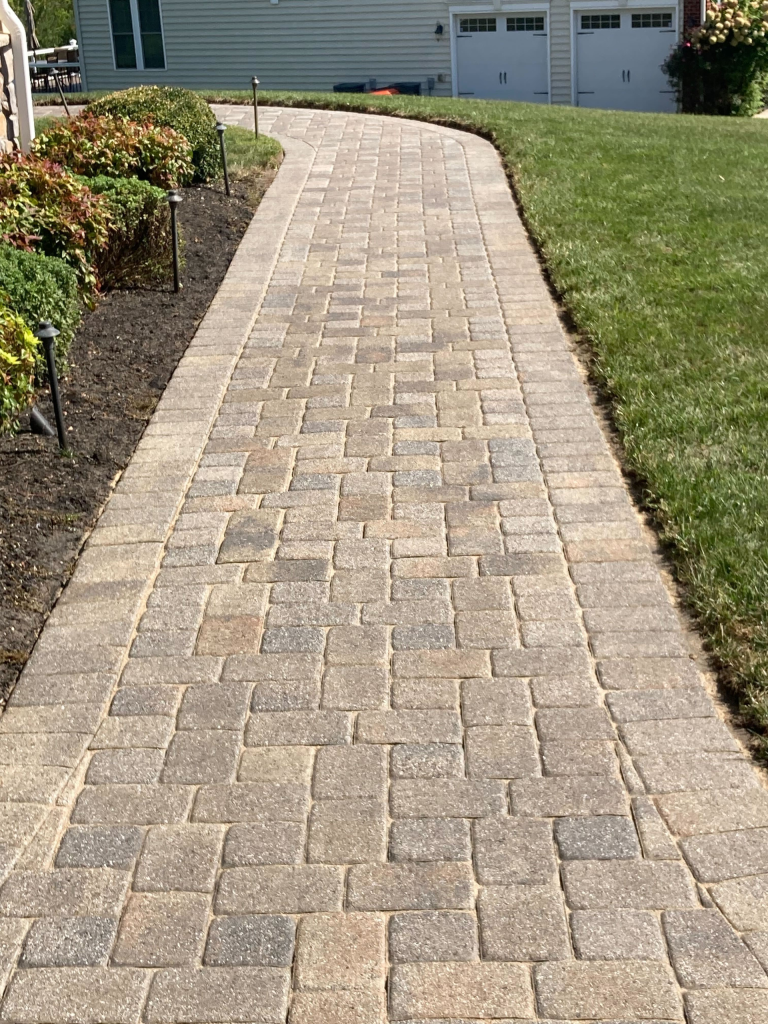
In most cases, we recommend polymeric sand (photo credit) over regular joint sand because it hardens when activated with water and helps prevent weeds from taking root. However, we’ve seen plenty of patios where polymeric sand was installed incorrectly, which can lead to cracking, washout, and weeds growing right through the joints.
How to Remove Weeds From an Existing Paver Patio
If weeds have already started growing between your patio pavers, don’t worry, because you can usually get them under control without replacing the patio. The key is removing the existing weeds, cleaning out the joints, and taking steps to prevent new seeds from growing.
Step 1 – Remove the Weeds and Their Roots
Start by pulling the weeds when the ground is slightly damp, which makes it easier to remove the roots without breaking them off. We recommend using a narrow weeding tool for stubborn growth rather than digging into the joints with something that could damage your pavers.
Step 2 – Clean the Joints and Remove Loose Debris
Once the weeds are gone, use a stiff brush or other suitable cleaning tool to remove dirt, loose sand, and organic material that has built up between the pavers. We have seen homeowners remove the weeds but leave behind enough dirt and debris for new seeds to start growing a few weeks later.
Step 3 – Replace Missing Joint Sand
After cleaning, inspect the joints to see where sand has washed away or dropped below the recommended level. However, before adding new polymeric sand, make sure the joints are properly prepared and dry, as directed by the manufacturer, or the material may not set correctly.
Step 4 – Maintain the Patio to Prevent Regrowth
Once your patio is clean and the joints are filled, regular maintenance is the best way to keep weeds from returning. We recommend blowing off grass clippings and leaves after mowing and checking the joints after heavy rain, especially during Savannah’s warmer months.
Does Landscape Fabric Under Pavers Prevent Weeds?
Does landscape fabric actually help prevent weeds? Yes and no, let us explain. We hear this from homeowners quite often, and the answer might surprise you: landscape fabric underneath your patio will not stop most weeds from growing between the pavers. That’s because many of those weeds come from seeds landing on top of the patio, not from roots growing up through the base.
However, certain geotextile fabrics do serve an important purpose in paver construction by separating soil from the aggregate base or helping stabilize certain ground conditions. They simply shouldn’t be treated as a permanent solution for weed prevention.
When Should You Call a Professional for Patio Weed Problems?
A few weeds between your pavers usually aren’t a reason to call a hardscaping contractor, and most homeowners can handle them with basic maintenance. However, if you’re noticing sinking pavers, large gaps, standing water, or joint sand constantly washing away, there may be a bigger issue beneath the surface.
We’ve seen patios where weeds were only part of the problem, while poor drainage or an unstable base caused the joints to open up. In those cases, fixing the underlying issue is more important than simply removing the weeds.
Frequently Asked Questions About Weeds Between Pavers
1. What Is the Best Way to Permanently Stop Weeds Between Pavers?
There is no guaranteed way to permanently stop every weed because new seeds can always blow onto your patio. However, keeping the joints properly filled, removing debris, and using polymeric sand where appropriate can greatly reduce how often weeds return.
2. Will Polymeric Sand Stop Weeds From Growing?
Polymeric sand is one of the better options for reducing weed growth because it creates a firmer joint that makes it harder for seeds to take root. However, it isn’t completely weed-proof, especially when the material cracks, deteriorates, or collects dirt over time.
3. Can I Use Vinegar to Kill Weeds Between Patio Pavers?
Household vinegar may burn the visible leaves of small weeds, but it often doesn’t kill the roots, meaning those weeds can grow back. We also recommend being careful because vinegar can damage nearby grass and plants, and stronger vinegar products may affect certain paver surfaces or finishes.
4. Does Pressure Washing Remove Weeds Between Pavers?
Pressure washing can remove small weeds and surface debris, but it can also wash out the joint sand if you use too much pressure. We’ve seen homeowners accidentally create bigger maintenance problems by blasting directly into the joints, so proper cleaning techniques are important. The last thing you want to do is need a patio repair because of pressure washing techniques, and there are so many pressure washers in Savannah, so choose wisely.
5. How Often Should You Replace Polymeric Sand Between Pavers?
There isn’t a set schedule for replacing polymeric sand because its lifespan depends on installation quality, weather, drainage, and patio maintenance. We recommend inspecting your joints once or twice a year and replacing damaged or missing material as needed, rather than replacing all the sand automatically.
Planning a New Paver Patio in Savannah, GA?
Sometimes the best solution for a weed problem and an old patio is a new one!
If you’re considering a new paver patio, one of the biggest things Miguel and our team at Coastal Hardscapes focus on is what goes underneath the pavers, not just how the finished patio looks. Proper base preparation, drainage, and joint materials all affect how well your outdoor living space holds up over time.
With nearly 20 years of hardscaping experience, we’ve learned that a beautiful patio should also handle coastal Georgia’s heat, humidity, and heavy rainfall.
We design and install custom paver patios throughout Savannah, Pooler, Richmond Hill, and surrounding communities. If you’re ready to transform your backyard into an outdoor living space your family can enjoy for years, contact Coastal Hardscapes to schedule a consultation.

 Beyond the Backyard: A Custom Paver Patio with Lighting and Seating Walls in Savannah Quarters