

The new stormwater tax hits this month in Savannah. How does that impact your utility bill if you a patio or more “Impervious area?” Today, we will answer that very question for you!
As you already most likely know, if you own a home in Savannah, you will now see a new line item on your city utility bills. The City of Savannah’s new Stormwater Utility charge is scheduled to appear on bills starting September 1, 2026, and the fee is based largely on the amount of impervious surface on a property.
That matters for anyone planning an outdoor improvement, because impervious surface isn’t limited to the house and driveway. The City’s own Stormwater Utility Credit Manual specifically lists patios and pool decks as examples of impervious area (where water cannot enter the ground). Naturally, homeowners like yourself who might be planning to construct a new patio, driveway extension, pool deck, or other hardscaping project want to know whether the improvement could raise their bill and luckily there is some good news we can share!
Let’s take a look!
Short answer: A new patio can increase the amount of impervious surface measured on your Savannah property, but that does not necessarily mean your stormwater bill will immediately increase. Most detached single-family homes are placed into one of four billing tiers based on their total impervious area. Your fee would generally change if the additional hardscaping moves your property into a higher tier.
What Is Savannah’s New Stormwater Utility Fee?
If you have ever been in downtown Savannah during an afternoon storm, you know stormwater is a major issue since the old city has outdated infrastructure. The City of Savannah’s solution was to create the Stormwater Utility to fund the maintenance, repair, and improvement of the city’s drainage and stormwater infrastructure. Revenue collected through the fee is dedicated specifically to stormwater-related work, and properties that generate more runoff generally pay more. The first bills started this month, September 1, 2026.
As hardscaping contractors here locally in Savannah, what interests us most is how the new fee may affect homeowners who are already considering adding patios, walkways, pool decks, driveways, and other outdoor improvements.
What Does Savannah Consider an Impervious Surface?
Simply put, an impervious surface is a man-made surface that prevents or limits rainfall from naturally soaking into the soil (think like a driveway; the water collects and then flows elsewhere). Under Savannah’s new program, that includes:
- Roofs
- Driveways
- Parking areas
- Compacted gravel
- Sidewalks on private property
- Pool decks
- Patios
- Sheds and accessory structures
The City’s final credit manual specifically lists pool decks and patios when describing impervious area. For example, here is how we can explain it:
When we replace 600 square feet of grass with a traditional concrete or paver patio, we are changing how rainwater moves across that part of the property. That is one reason drainage should be part of the patio design from the start, rather than something homeowners think about after the project is finished.
So let’s look at how that impacts you and solutions you can utilize.
Does a Concrete Patio Count as Impervious Surface in Savannah?
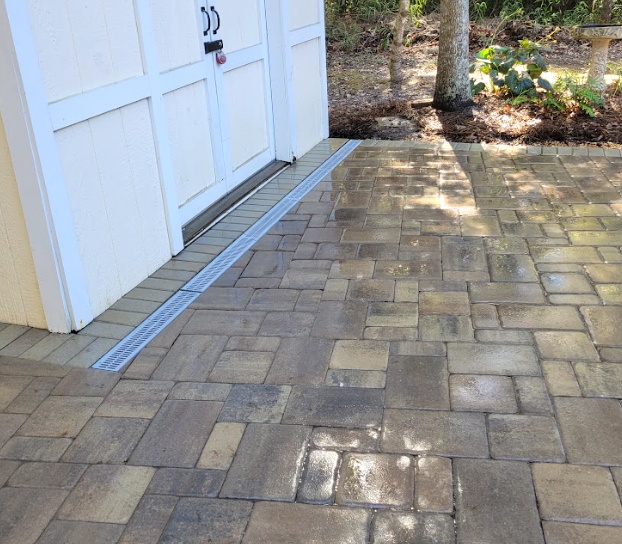
Generally, yes. Standard concrete does not allow rainfall to infiltrate naturally through the surface, and patios are specifically included in the City’s examples of accessory impervious areas.
That does not mean homeowners like you should avoid concrete patios just to save a few dollars on utilities. Instead, the important considerations are factors like:
- Patio size
- Existing property drainage
- Finished elevation
- Slope
- Downspout locations
- Where patio runoff will go
- Total impervious area already on the property
The good news is that just because you install a patio doesn’t mean it is impervious out of the gates; let us explain below!
Do Paver Patios Count as Impervious Surface?
The good news is that simply using individual pavers does not automatically make a patio permeable, phew! A standard paver installation normally has a compacted base and is designed primarily as a hard surface rather than a stormwater infiltration system.
There is a difference between a patio made from pavers and a permeable paver system. The City’s final credit manual specifically identifies pervious pavements as one type of residential Green Infrastructure/Low Impact Development (GI/LID) practice that may qualify for a stormwater credit when properly designed, installed, and approved.
Good to know: A paver patio and a permeable paver system are not the same thing under Savannah’s stormwater program. Only a properly engineered permeable system may qualify for credit consideration — swapping in pavers alone does not.
Could Permeable Pavers Reduce My Savannah Stormwater Fee?
Potentially. Savannah’s Residential GI/LID credit can provide an eligible detached single-family residential property with a 20% stormwater user fee credit for three years. Qualifying practices may include pervious pavements, rain gardens, rain barrels, cisterns, bioretention, and certain other approved practices.
Installing something marketed as “permeable pavers” does not automatically earn the credit. The City requires the practice to meet its standards, be documented, and be approved. The manual actually encourages homeowners to work with the City’s Stormwater Utility Manager when determining which practice is appropriate for their property.
How Much Is Savannah’s Stormwater Utility Fee?
| Total Impervious Area | Monthly Fee | Bi-Monthly Fee |
|---|---|---|
| 400–1,500 sq. ft. | $2.09 | $4.18 |
| 1,501–4,000 sq. ft. | $4.75 | $9.50 |
| 4,001–5,500 sq. ft. | $8.35 | $16.70 |
| 5,501–10,000 sq. ft. | $12.35 | $24.70 |
These are the City’s approved detached single-family residential tiers. Homes with more than 10,000 square feet of impervious area are calculated differently, using the City’s Equivalent Residential Unit (ERU) system.
Will Adding a Patio Actually Increase My Stormwater Bill?
Example 1: Your bill may stay the same
Let’s say your Savannah home currently has 2,800 sq. ft. of impervious area. Adding a 500 sq. ft. patio brings the new total to 3,300 sq. ft. Both totals fall within Tier 2, so the property stays in the same stormwater billing tier and the fee does not change.
Example 2: Your bill could increase
For a larger home with 3,800 sq. ft. of impervious area. Adding a 500-sq.-ft. patio brings the new total to 4,300 sq. ft. That moves the property from Tier 2 to Tier 3 — the monthly fee would go from $4.75 to $8.35, and the bi-monthly fee from $9.50 to $16.70.
These examples are illustrations based on the City’s published tiers. The City of Savannah determines the official impervious-area measurement and billing classification for any individual property.
How Does Savannah Know How Much Impervious Surface Is on My Property?
The City uses GIS mapping, aerial imagery, parcel data, and impervious-area measurements to calculate each property’s billing tier. According to the City’s FAQ, these measurements can be updated when a parcel changes — for example, when new driveways, buildings, or parking areas are added.
That makes it reasonable for anyone planning a significant patio or hardscape addition to understand their current impervious-area situation before assuming the fee will or will not change.
What About a New Driveway, Walkway or Pool Deck?
| Project | Could Add Impervious Area? |
|---|---|
| Traditional concrete patio | Yes |
| Traditional paver patio | Typically yes |
| Concrete driveway extension | Yes |
| Traditional paver driveway | Typically yes |
| Pool deck | Yes |
| Private sidewalk/walkway | Potentially yes |
| Approved permeable pavement | May be treated differently / potentially qualify for GI/LID credit |
| Landscaping or planted areas | Generally pervious |
It is the total property that matters, not just one individual project.
Can Drainage Improvements Lower My Savannah Stormwater Bill?
Some approved stormwater improvements may qualify for credits – this is the great news! Savannah’s final credit program includes several categories. For homeowners, the relevant ones that pertain to you can include:
- Residential GI/LID practices
- Tree planting
- Low-impact parcels
- No-direct-discharge properties
- Septic maintenance
- Natural-area preservation
The Residential GI/LID category specifically includes practices such as rain gardens, rain barrels, and pervious pavement, with an eligible 20% credit. This means that if we install trees, landsacping, rain barrels, and even permeable pavers, we can help you actually see a credit!
Everything from a typical French drain, catch basin, or underground pipe should not automatically be advertised as qualifying for a credit. Those solutions can absolutely help manage water on a property, but that alone does not guarantee eligibility under the City’s stormwater credit program.
Should You Consider Stormwater Before Building a Patio in Savannah?
Here is the simple answer: we ALWAYS consider stormwater and drainage when installing a patio! Before any patio design begins, Coastal Hardscapes works through a handful of questions you might have, which can include:
- Where does water currently go?
- Where will it go after replacing grass with hardscape?
- Are gutters dumping near the patio?
- Is the yard already holding water?
- Will patio elevation direct water toward the house?
- Are catch basins or underground drainage needed?
- Could permeable materials make sense?
- Is there an opportunity to solve an existing drainage problem while building the patio?
Does Savannah’s Stormwater Fee Apply Outside the City of Savannah?
This program applies specifically to City of Savannah Stormwater Utility customers. Someone with a Savannah mailing address may actually live in unincorporated Chatham County, Pooler, Garden City, Thunderbolt, or another nearby municipality.
Depending on where you live, some areas may have different stormwater programs, rules, or fees, so homeowners outside Savannah’s city limits should check with their own local utility rather than assume this specific program applies to them.
Planning a Patio in Savannah? Look at the Entire Property First
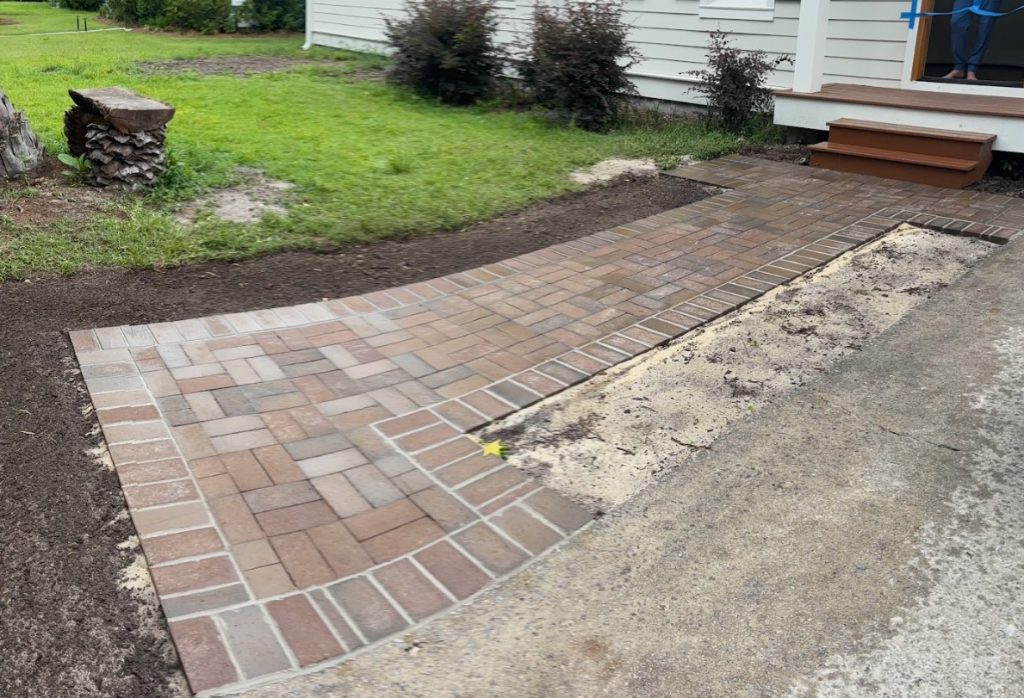
Here is what we recommend for planning a patio! Whenever we design a patio, the team is not just deciding where the pavers should go. There is so much more to it, and before drawing up a plan, Miguel and the team look at:
- House elevation
- Existing concrete
- Downspouts
- Drainage patterns
- Trees and roots
- Irrigation
- Access
- Property layout
- How the homeowner wants to use the space
- Potential future features
- Patio material
- Runoff
Our goal is to create a backyard that looks great without causing a drainage headache elsewhere on the property, which is why you should always choose a profesional hardsacper in Savannah! For a consultation, simply tap below and let’s see how we can help you!
Frequently Asked Questions
Will a new patio increase my Savannah stormwater utility bill?
Potentially. A new patio can increase the amount of impervious surface on the property. However, most detached single-family Savannah properties are billed using impervious-area tiers, so adding a patio does not necessarily increase the fee unless the additional impervious area changes the property’s billing classification.
Does concrete count as impervious surface in Savannah?
Yes. Traditional concrete prevents most rainfall from soaking directly into the ground and would generally be considered impervious surface.
Does a paver patio count as impervious surface?
A traditional paver patio should not automatically be considered permeable simply because it uses individual pavers. A specifically designed permeable pavement system is different and may qualify as an approved stormwater management practice.
Can permeable pavers qualify for a Savannah stormwater credit?
Potentially. Savannah’s Residential GI/LID program specifically includes pervious pavement among practices that may qualify for a 20% stormwater utility credit when City requirements are met and the practice is approved.
Does a pool deck count toward Savannah’s stormwater fee?
The City’s Stormwater Utility Credit Manual specifically identifies pool decks among accessory impervious areas when calculating a property’s impervious footprint.
Does Savannah count my patio separately from my house?
The City evaluates the total impervious surface on the parcel. That can include the house, driveway, patio, pool deck, and other impervious improvements.
When does Savannah’s new stormwater fee begin?
The City says the first Stormwater Utility bills are scheduled to begin mailing September 1, 2026.

 New Concrete Patio, Pergola & Drainage Project in The Highlands at Godley Station